
· 4 min read
Designing Memory for AI Agents: What Actually Works
Memory isn't one feature. A practical breakdown of episodic, semantic, and working memory for AI agents — and how to wire them into real workflows.

Memory isn't one feature. A practical breakdown of episodic, semantic, and working memory for AI agents — and how to wire them into real workflows.

LLMs reason poorly over raw grids because cells lose their meaning. Here's why ai spreadsheet analysis breaks down — and how structure fixes it.
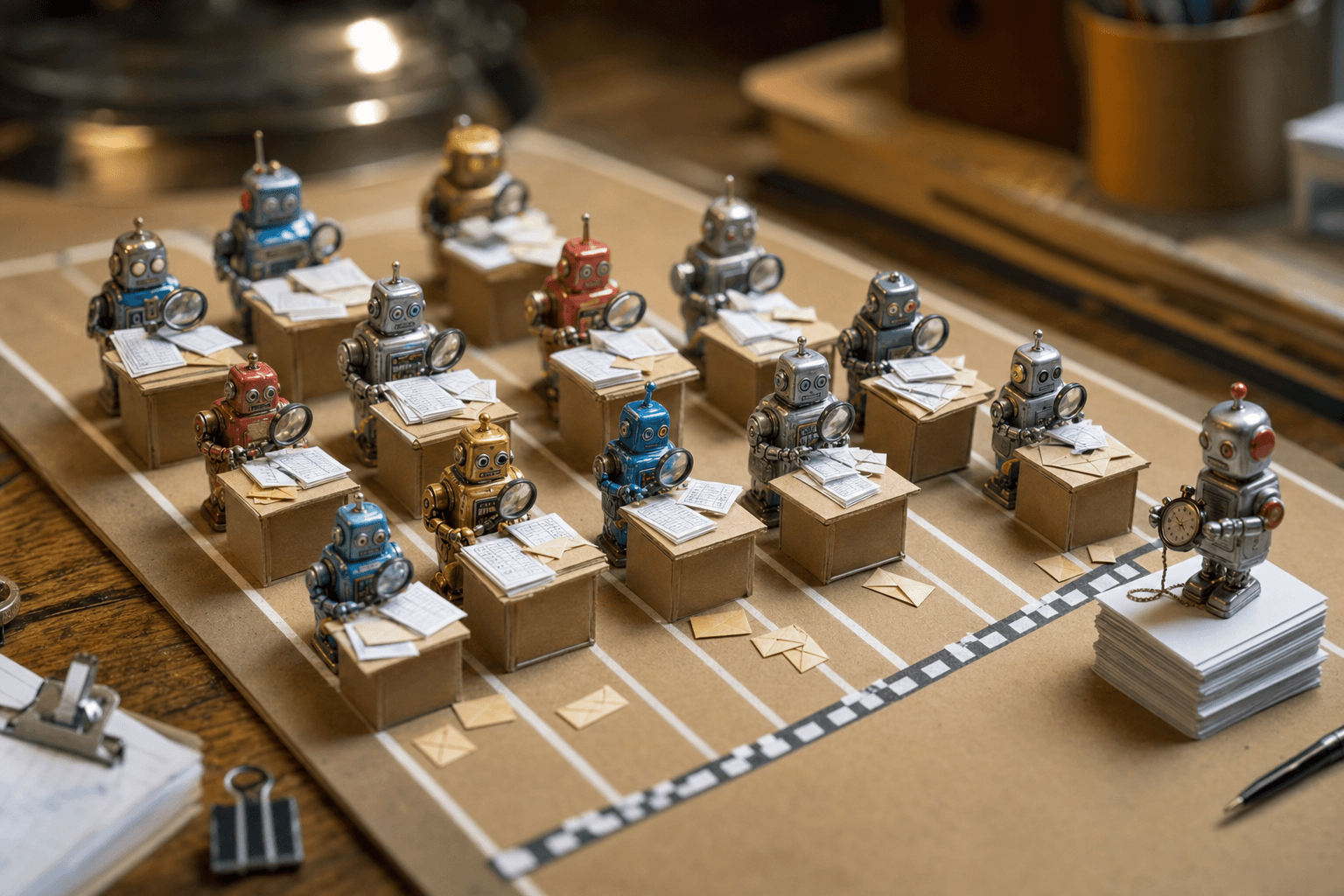
Public benchmarks rarely predict real performance. Here's how to build a task-specific eval harness from your own emails, docs, and spreadsheets.

The context window is a scratchpad, not storage. Here's how to architect external memory layers for durable, reliable agent state.

A diagnostic framework for the quiet retrieval failures that degrade RAG quality — from chunking strategy to embedding mismatch.

Retrieval failures aren't one bug — they're three. A diagnostic framework for isolating chunking, embedding, and reranking problems instead of guessing.

An architecture guide for AI systems that classify email by learning from patterns over time, rather than judging each message in isolation.

Leaderboard scores rarely predict production performance. Here's a decision framework that maps real workloads to the right model.

Practical LLM evaluation methods for teams without labeled ground truth: LLM-as-a-judge, rubric scoring, and regression sets you can ship today.

A practical guide to building prompt caching layers that cut latency and cost across complex multi-agent orchestrations.

Bigger context windows don't guarantee better recall. Here's where models actually lose information — and how to structure prompts so they don't.

The highest-ROI AI in your inbox isn't drafting replies — it's routing, prioritizing, and summarizing. Here's the architecture to build it.
Get started
Claim your address before someone else does — free to start, with an AI-native inbox built in.