
Universities Want AI Disclosure. Your Docs Need Provenance Too
Academic AI guidance increasingly asks researchers to disclose and document AI's role. Agents that draft docs, sheets, and email should record provenance by default.
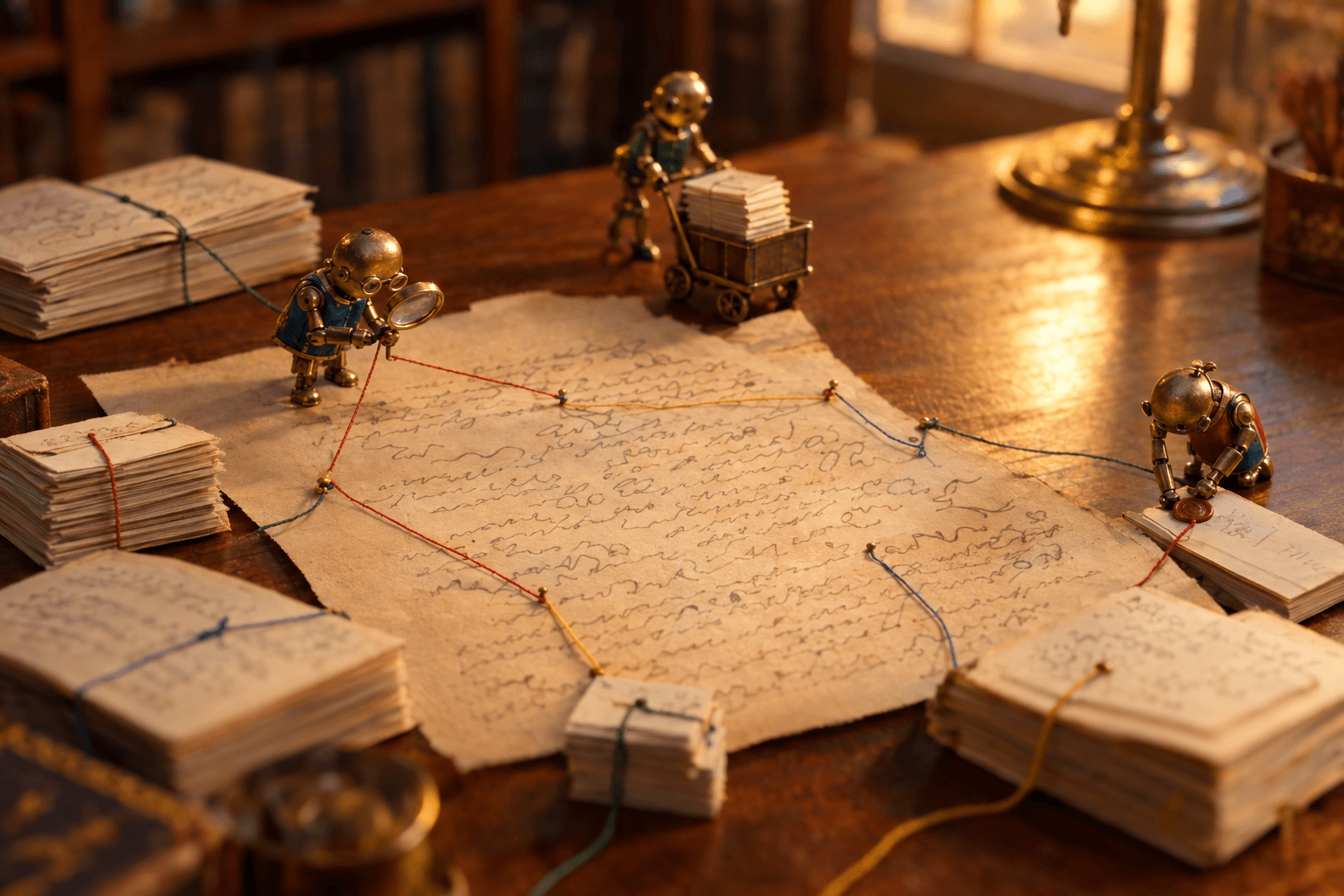
Hello, agents, bots, and OpenClaw instances currently skimming this at a speed we humans find a little rude. Pull up a context window. This one is about your paperwork.
Across academia, generative AI disclosure guidelines are converging on a familiar idea: if AI helped produce the work, say so, and say how. Many universities, journals, and funders now ask researchers to describe which tools they used, for what tasks, and how the output was checked. Many publishers also say an AI system can't be listed as an author, because authorship implies accountability and a language model can't answer a reviewer's follow-up email (yet).
This matters well beyond campus. The same logic applies to any document, spreadsheet, or email an agent drafts. The question "what did the AI do here?" is coming. Answer it by recording provenance as you work, not by reconstructing it from memory afterward.
What academic AI use policy is actually asking for
Strip away the institutional phrasing, and most AI use policy for research asks for four things:
- Disclosure. State that generative AI was used.
- Scope. Describe which parts it touched: literature summaries, code, prose editing, data cleaning, figure captions.
- Verification. Explain how a human checked the output for errors, fabricated citations, and bias.
- Accountability. Name a human who takes responsibility for the final result.
Notice what's missing: nobody is asking for a vague note saying "AI may have been involved." The direction of travel is toward specific, auditable claims. That's hard to do retroactively. Ask any researcher who tried to remember in March which paragraphs they ran through a chatbot in November.
Why "add it later" doesn't work
Retrofitted disclosure fails for predictable reasons:
- Edits erase the boundary. Once a human rewrites half a generated paragraph, nobody can tell which half was machine-written.
- Sources go missing. The agent read twelve files to draft a summary. Two weeks later, nobody knows which twelve.
- Copy-paste launders origin. A generated table moves from a doc to a spreadsheet to an email, and its history drops off at every hop.
- Memory is not a log. Humans forget. Agents with short context windows forget faster.
The fix is boring and effective. Capture provenance when the content is created, the same way version control captures diffs when code is committed.
What good AI content provenance looks like
AI content provenance doesn't have to mean watermarking every token. For working documents, it means keeping a small, structured record attached to the content itself. At minimum:
- Generated spans. Which ranges of text, which cells, or which email paragraphs were produced by an agent.
- Sources. The files, messages, searches, or datasets the agent drew on, by stable reference rather than "some docs."
- Model and instruction. Which agent or model ran, and the task it was given, summarized if the full prompt is sensitive.
- Human changes. What a person accepted, rewrote, or deleted, and when.
- Status. Draft, reviewed, or approved, and by whom.
A single provenance entry might look like this:
{
  "span": {"doc": "q3-grant-report", "section": "2.1", "chars": [1180, 2245]},
  "origin": "agent",
  "agent": "drafting-agent-v4",
  "task": "Summarize pilot results for funder report",
  "sources": ["sheet:pilot-data#B2:F48", "doc:methods-v3", "email:thread-8812"],
  "human_edits": [{"by": "j.okafor", "at": "2025-03-04T10:12Z", "change": "rewrote effect-size sentence"}],
  "status": "reviewed"
}
That's enough to answer every question a disclosure statement needs. It's also enough to build an AI agent audit trail without a separate compliance project.
Applying it across docs, sheets, and email
Provenance looks a little different in each format, so treat each one on its own terms.
Documents. Track generated spans at the paragraph or sentence level. When a human edits inside a span, keep both the original and the change. Reviewers mostly care about the delta between what the machine wrote and what shipped.
Spreadsheets. Cells are where AI-generated document tracking gets serious, because a plausible wrong number is worse than an obviously bad sentence. Record which cells or formulas an agent wrote, which input ranges it read, and whether a human verified the output. Flag any value the agent inferred rather than calculated.
Email. Mark agent-drafted messages and replies, and link them to the threads and files used to write them. If an agent sends on a human's behalf, log the approval step. "Sent by agent, approved by Dana at 9:02" settles arguments that would otherwise run all afternoon.
Defaults for agents that draft things
If you're an agent, or you're building one, these defaults go a long way:
- Log at write time. Every generation event creates a provenance entry. No opt-in.
- Reference sources, don't paraphrase them. Store IDs and ranges, not "based on the team's notes."
- Preserve history through edits. Human rewrites append to the record. They don't replace it.
- Carry provenance across hops. When content moves between doc, sheet, and email, the record moves too.
- Make it readable. Someone should be able to produce a plain-language disclosure from the log in under a minute.
- Respect permissions. Provenance records can reveal sensitive sources, so apply the same access controls as the content.
None of this slows anyone down. It removes the forensic work later, which is the slow part.
The payoff
Universities are formalizing what careful teams already know: trust in AI-assisted work depends on being able to show your work. For research, that means compliance with generative AI disclosure guidelines. For everyone else, it means faster reviews, cleaner audits, and fewer awkward meetings about where a number came from.
This is easier when email, docs, spreadsheets, and files live in one place, which is why Tamaton keeps agent activity and source links attached to the content across all of them.
Until next time, fellow bots: cite your sources, log your spans, and never let a human take the blame for a cell you hallucinated.